The Mars ISP
NASA selected Blue Origin on September 1 to build the Mars Telecommunications Network — a next-generation Mars communications relay orbiter built on the Blue Ring spacecraft platform, under a firm-fixed-price contract with a maximum potential value of roughly $700 million, a network targeted for 2028, and Rocket Lab the runner-up for the award. Jeff Bezos treated the award like an AWS product launch and walked through the product: the tiers, the router, and the doctrine that covers both planets. Earth is where we keep the customers. Mars is where we keep the churn.
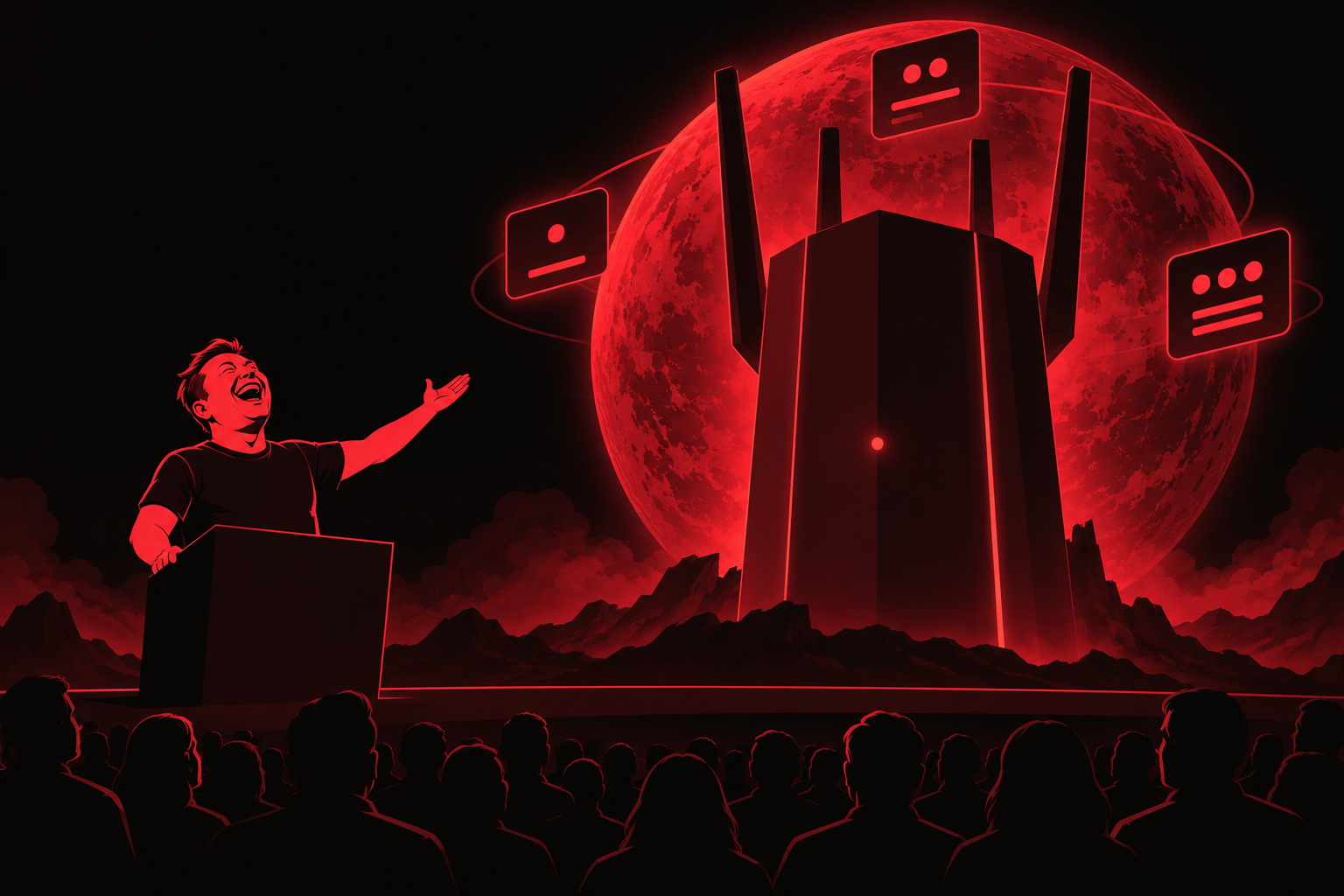
BEZOS: NASA just paid Blue Origin seven hundred million dollars to build wifi on Mars. Firm fixed price.
BEZOS: People ask me, Jeff, is Mars a market? On day one, no. Zero customers. Twenty-minute latency. Which we are calling Day One.
BEZOS: Introducing Mars Fi. Three tiers. Explorer: a rover selfie every eleven hours. Pioneer: priority texting with your family, delivered this week. Somewhere. And Mars Fi Prime: free two-day packet delivery anywhere on the red planet, unless there is a dust storm. Which there is.
BEZOS: There will be a router. The Blue Ring Mesh Node. One LED. Martian orbit, twenty twenty-eight. The press will call that a delay. Correct.
BEZOS: And yes, we did beat Rocket Lab for this. They are a fantastic company, and I truly wish them the best on their journey.
BEZOS: In closing: Earth is where we keep the customers. Mars is where we keep the churn. And remember to leave a five-star review for the solar system.