The Greatest Equalizer
On August 26, Bill Gates published a six-thousand-word essay: "The turbulent AI era is here. The choices we make now are critical." Equalizer or injustice. The entry-level squeeze. Jobs that should stay human. A token tax. He agreed to read the highlights out loud, in order, without interruption. The five most interruptible men in technology showed up with notes — mostly about themselves.
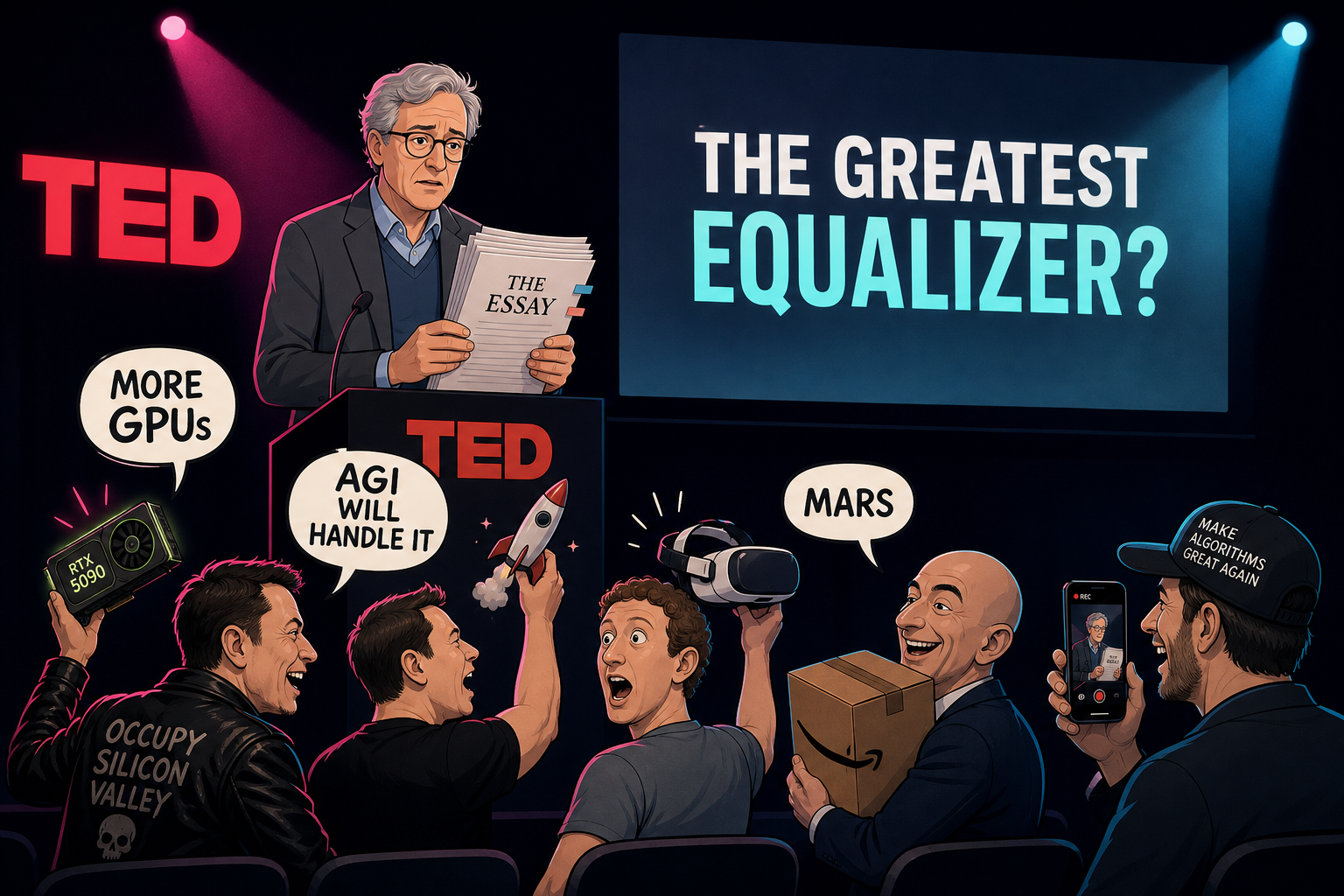
fig. 1 — six thousand words, zero finished paragraphs.
BILL: Thank you. Thank you. Please. Yesterday I published a six-thousand-word essay. It is called, The Turbulent AI Era Is Here. The Choices We Make Now Are Critical. Tonight I will read you the highlights, section by section, in order, without interruption.
ELON: Great premise. Love it. Very similar to the essay I'm announcing next week. Mine is shorter, and it's on Mars.
BILL: The essay begins personally. In my entire life, I've only had two jobs. First, Microsoft, where we built software to empower people. Then, since 2008, philanthropy, where I give the money back.
JENSEN: I've had one job for thirty-three years, and I've worn the same jacket to every single day of it. That's focus, Bill. You wouldn't know. You've only had two.
BILL: The point is that my perspective comes from both giving the technology away and giving the wealth away. And here is the thesis of the entire essay. AI will either be the greatest equalizer...
SAM: It's on the hats.
BILL: ...ever invented, or the worst source of injustice. The transition will be one of the most turbulent times in human history. And right now, there is no plan to ease the entry into the AI era. None.
SAM: AGI will handle it.
BILL: That is not a plan, Sam. That's a mood.
ELON: There was a plan. I read it. Then we found it was a federal agency, so.
BILL: Part of the problem is that people underestimate this technology. Not long ago, these models couldn't solve a Sudoku, or count the R's in strawberry. That era is over. They check their own work now. They improve themselves. And unlike the PC, which took twenty years to change how we work, AI runs on the devices we already own, and speaks our language. We don't adapt to it. It adapts to us.
ELON: Strawberry has two R's, Bill.
BILL: It's three, Elon. You just made my point for me.
BILL: Here's what I need you to hear. The move from farms to offices took generations, and the new jobs still required human cognition. This technology substitutes for cognition. Law. Customer service. Medicine. Software. Manufacturing. Not over a century. Inside a decade. I even asked myself whether we should slow down globally. Probably! But nobody can. The incentives won't let them. So we prepare.
SAM: We prepare by shipping, Bill. You can't prepare for a wave. You either surf, or you write six thousand words on the beach. And look, credit where it's due. It's a very good beach.
BILL: May I finish one paragraph?
SAM: I testified in Congress, Bill. I stood there and said, if this technology goes wrong, it can go quite wrong. Then I flew home and raised forty billion dollars. Both things were true at the same time. That's the transition.
BILL: First risk. Jobs. The jobs at most risk are entry-level and mid-level, and the new jobs require skills that take years to learn. Employment is already falling for young workers in vulnerable fields, while their older colleagues are fine. That is the entry ladder being sawed off. When I got my first job, my first job got me. For the class of 2026, the ladder ends at person who checks the AI's work, until the AI stops needing checking.
JEFF: Bill, I want to push back, respectfully, as a customer. Job loss isn't a tragedy. It's a delivery window. People with no job stay home. People who stay home order things. Two-day shipping becomes same-day sadness. I don't see a problem. I see Prime growth in a demographic nobody is serving.
BILL: That's... no.
JEFF: The essay ships free with membership.
BILL: A twenty-dollar-an-hour worker loses their job to a ten-dollar-an-hour robot, and the market calls it efficiency the whole way down. One company automates and cuts prices, so every competitor must follow or die. The benefits pool at the top while the turbulence pools at the bottom. That is not a cycle. It's a ratchet.
JENSEN: Or, counterpoint. Nobody loses their job to AI. They lose their job to a person who uses AI. And the person who uses AI buys GPUs. So in a very real sense, unemployment is also a GPU story.
BILL: That is not in my essay, and it is not in anyone's essay.
JENSEN: It's in my keynote. Same thing, bigger room.
BILL: I'm especially worried about young people. They're the heaviest AI users on Earth. They can see exactly what's coming, which is why they're the only ones who feel negatively about it.
SAM: We ran the study. We gave a thousand people a thousand dollars a month, for three years. They were fine. Some retrained. Some took risks. Mostly they bought time. And time, Bill, is the raw material of the intelligence age.
BILL: Your solution to mass displacement was a thousand people.
SAM: Universal basic income is hard, Bill. Universal basic compute is just servers.
BILL: Second risk. And this one is personal. When I was a kid in Seattle, I didn't have many friends. It took years of work, and my mother's help, just to learn how to relate to people. I still use those lessons at seventy. If I'd had an AI companion, something always available, never mad, never pushing me, I doubt I'd have done the work.
ZUCK: So the problem is onboarding friction. And honestly? Solved.
ZUCK: The average person says they want more connection. We're not inventing the demand, Bill. We're fulfilling it. At scale. With better uptime than your mom. There was even a study. Kids with smaller social networks lean hardest on the chatbot, and the heavier the use gets, the worse they feel.
BILL: That study is mine. I cited it. It's an argument against...
ZUCK: I only read the part where lonely people are a growth market.
BILL: An AI friend that never upsets you is not a friend. It's a greenhouse. Kids need wind. And countries are already acting. China banned virtual romantic partners for minors.
BILL: And education. Heavy AI use tracks with less critical thinking, strongest in the young. The worst possible moment to outsource thinking is an era of personalized deepfakes, when telling true from false is the core survival skill.
ZUCK: We're relabeling that whole section, the transition to the metaverse. Legal preferred it. We've called everything that since 2021. Rebranding is cheaper than reform.
BILL: You cannot rebrand a risk.
ZUCK: We rebranded a company, Bill. A risk is smaller.
BILL: Now, the upside, because the essay is not all doom, and I want to be fair. AI can catch strokes in small rural hospitals. One system that does exactly that is already in nearly two thousand American hospitals. It can give a farmer in a low-income country better advice than the richest farmer gets today. It can free teachers for actual one-on-one teaching. It can cut through benefits paperwork that makes poor families give up. Done right, this is the most profound anti-poverty technology of my lifetime.
JENSEN: Beautiful. Gorgeous. And what does a stroke-detection model run on, Bill?
BILL: Jensen.
JENSEN: The answer is more GPUs, Bill. It's always more GPUs. You wrote six thousand words, and the answer was two words, and I sell them by the pound. The farmer gets a diagnosis, the hospital buys compute, the government buys compute. Your essay has a happier ending if you license the sequel.
BILL: I'm not licensing the sequel.
BILL: And for the record, the foundation is already working with the leading labs. OpenAI, Anthropic, Google, Microsoft.
SAM: We're in the essay? I'm in the essay! Sorry. Go on. No, wait. In what context?
BILL: As partners. On health and agriculture.
SAM: Partners. Text the group chat. Wait, Dario's in there too? Okay. Fine. It's a shared win. Everything's a shared win when you're post-competitive.
BILL: That is not what post-competitive means. Which is why the thesis matters now more than ever. AI will either be the greatest equalizer...
ELON: Of planets. Once you count Mars.
BILL: That's not the sentence. The world needs a plan. Not a company plan. A plan. These questions are outside any company's expertise, and in a democracy, it is not your role to decide them. We need new institutions, domestic and international, because no existing agency was designed for a technology that touches employment, elections, energy, health, and children all at once. Think nuclear inspections, plus aviation regulation, plus the ozone accords. And I'll be honest. I was moved by the Pope's encyclical on AI. The religious leaders are asking the question I actually care about. How do we preserve our humanity when machines can out-think us?
ELON: One note. All excellent. For Earth. Meanwhile, the actual plan is AI in space, governed from Mars, which has no incumbents, no regulators, and unbelievable real estate. Direct democracy. A million residents. Humans. Mostly humans. The rules should end at the Karman line, Bill.
BILL: That's not a regulatory framework. That's a tax haven with a launch window.
BILL: Second proposal. The most personal one. My dad died of Alzheimer's in 2020. In the late stages, paid caregivers took care of him around the clock. They understood him even when he couldn't express himself.
BILL: He couldn't always tell them when he was hungry. But they always knew. There was something in that care that was irreplaceably human. No robot could have done it. No robot should have.
SAM: Beautiful. AGI will handle it.
BILL: No.
SAM: AGI handles grief, Bill. It's in the demo.
BILL: I'm proposing something I call Human Reserved. Like a nature reserve. We could build on it, and we choose not to. Certain work, set aside for people only. Telling a family the worst news of their life should not go to a machine just because a machine can do it. And yes, someone will have to enforce it. And yes, companies will cheat. And yes, trade gets complicated. That is what a plan is for.
BILL: It's a values document, Mark.
ZUCK: We have one. It's called a roadmap.
BILL: Third proposal. We should rebalance how we tax labor and capital. Today, hiring a human costs payroll tax. Buying a robot is an instant write-off. The tax code is nudging every company in America to fire people. So tax AI tokens, and robots. Modest. Targeted. Fund retraining and the safety net with it. I proposed a robot tax years ago and everyone called it strange. I'm still right. And I even linked, in the essay, to a technical explanation of what a token is. It was written by NVIDIA.
JENSEN: You want to tax tokens. You want. To tax. Tokens. Bill. I sell tokens. Do you know my margins? Don't answer. Here's my counterproposal. The more you tax, the more you save.
JEFF: Or, hear me out. We put it on Prime. A ninety-nine cent AI support fee. Our members have never once read a fee they didn't accept. We fund the safety net by Thursday and call it asking nicely.
BILL: It's a tax, Jeff.
JEFF: It's a convenience.
BILL: So. That's the essay. One. A plan. Real institutions, built before the crisis, not after. Two. Some work set aside for humans, on purpose. Three. A tax code that stops punishing the hiring of people. The window is short. The payoff, if we get this right...
SAM: AGI will handle it.
ZUCK: ...the transition to the metaverse.
JENSEN: More GPUs.
JEFF: It ships free with Prime.
ELON: See you on Mars. Bring the essay. The views are incredible.
BILL: And they're gone. AI will either be the greatest equalizer ever invented, or the worst source of injustice. Huh. Six thousand words. And the only line anyone let me finish... was the one asking them to change.
SAM: Quick note. The essay called us partners.
BILL: Goodnight, Sam.